
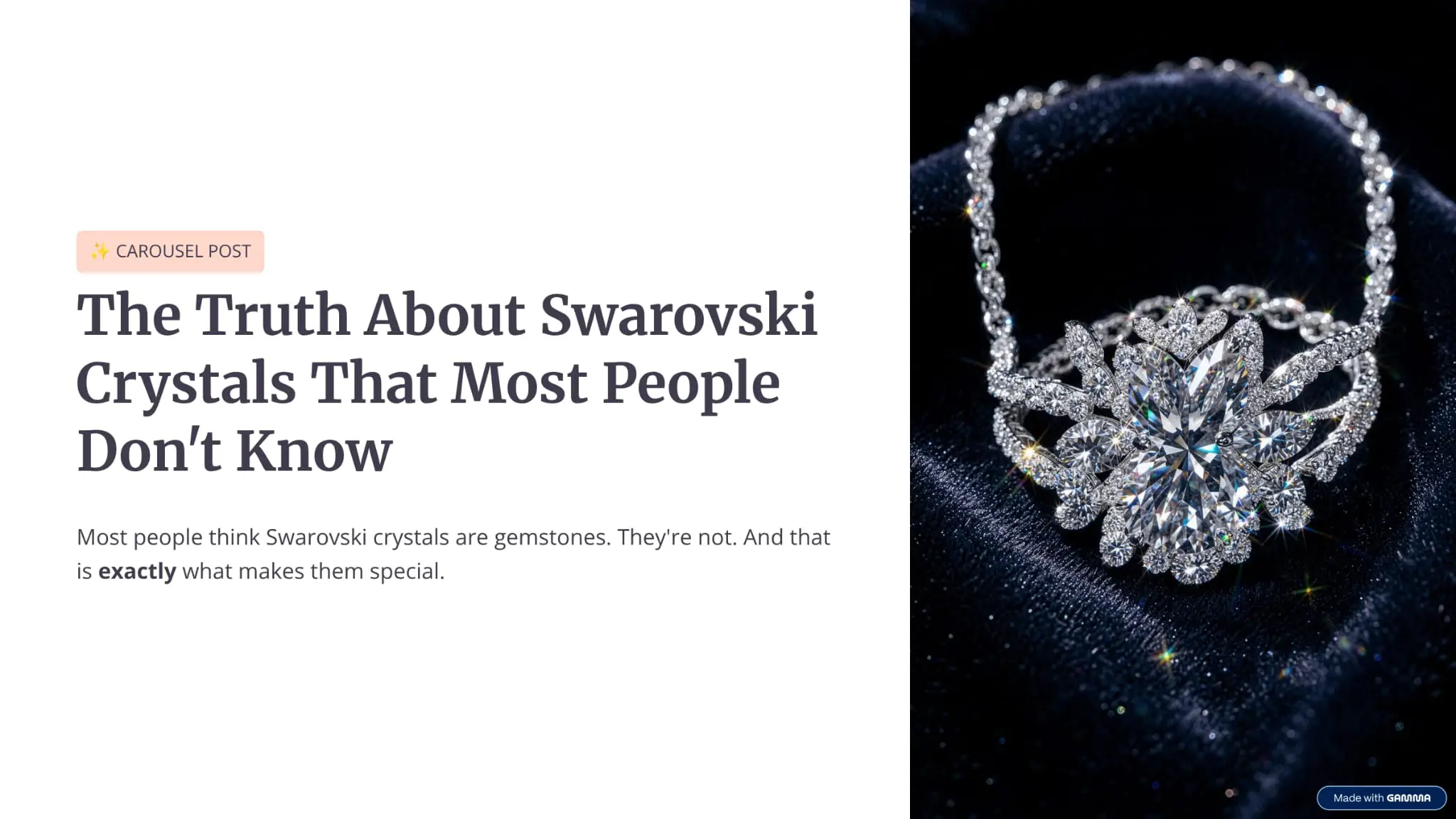


Many people assume Swarovski crystals are simply imitation diamonds. The truth is more interesting. Swarovski crystal is a precision-cut glass with its own history, science and appeal. Understanding what it really is will help you make smarter choices when you shop for crystal jewellery.
A short history of Swarovski
Daniel Swarovski was born in 1862 in Bohemia, in what is now the Czech Republic, and trained as a glass cutter in his father’s workshop. In 1892 he patented an electric cutting machine that could cut crystal far more precisely and consistently than by hand.
In 1895 he co-founded the company in Wattens, in the Tyrol region of Austria, where local hydroelectric power could run his energy-hungry machines. More than a century later, Swarovski is still headquartered in Wattens and is one of the best-known crystal brands in the world.
What is Swarovski crystal made of?
Swarovski crystal is not a mined gemstone. It is a man-made glass, produced by melting quartz sand, soda, potash and other minerals at very high temperatures. Traditionally, lead was added to crystal glass to make it denser and more brilliant.
In 2012, Swarovski introduced its lead-free Advanced Crystal formula, and the company has since reduced lead content even further. So modern Swarovski crystal keeps its sparkle without the lead used in traditional crystal.
Why Swarovski crystals sparkle
The secret is precision cutting. Each crystal is cut with many facets at carefully controlled angles, so light enters, bounces around inside and leaves as bright flashes and rainbows. Some crystals also have special coatings. The best known is Aurora Borealis, or AB, which gives the surface an iridescent rainbow effect.
Swarovski crystal vs diamond
A diamond is natural crystallised carbon and the hardest natural material on earth. Swarovski crystal is glass, which is much softer, so it can scratch or chip if knocked against hard surfaces. Diamonds also hold their value, while crystal is bought for its beauty rather than as an investment. For everyday sparkle at an accessible price, though, well-cut crystal is hard to beat.
Crystal, rhinestone and cubic zirconia: what is the difference?
Rhinestone is a general name for imitation stones made from glass or acrylic, and quality varies widely. Cubic zirconia is a lab-made crystal that is harder than glass and often used as a diamond alternative. Swarovski is a brand of high-quality crystal glass, known for consistent cutting and colour.
How to know you are buying genuine Swarovski
Buy from Swarovski stores or authorised retailers, and be cautious of pieces labelled “Swarovski” at very low prices. If a seller claims their jewellery uses Swarovski crystals, it is fair to ask how they can confirm it.
How to care for crystal jewellery
Crystal loses its sparkle when it gets coated with lotion, sweat and dust. Wipe it with a soft, dry cloth after wearing, keep it away from water and perfume, and store each piece separately so harder stones and metal do not scratch it. Our jewellery care guide has more tips.
If you love the sparkle of crystals, explore our crystal pendants and brooches, designed for everyday elegance.
Frequently asked questions
Is Swarovski real crystal or glass?
Technically, Swarovski crystal is glass. “Crystal” is the traditional name for high-quality, highly transparent glass that is cut to sparkle.
Do Swarovski crystals lose their sparkle?
The crystal itself does not fade, but oils, lotion and dust can dull it, and special coatings can wear with rough handling. Gentle cleaning with a soft cloth restores most of the shine.
Is Swarovski crystal worth it?
If you value brilliance, consistent quality and a well-known name, yes. Just remember it is fashion, not an investment like gold or diamonds. For more on this, read our guide to fine jewellery vs fashion jewellery.
Follow Jewellery Online SG on Facebook and Instagram for more jewellery tips, styling ideas and inspiration.
[…] Pearls and crystals need a little extra care because they are softer than metal. Keep them away from perfume and hairspray, wipe them after every wear and store them away from harder pieces. Learn more in our guides All About Pearls and The Truth About Swarovski. […]